








Planning a trip to Bali? Then “Bali Belly” is one term you need to know before you board that plane. It is one of the most talked-about travel health concerns in Southeast Asia, and for good reason; thousands of tourists deal with it every single year. The good news is that with the right knowledge, it is largely preventable, and when it does hit, it is very treatable.
This guide covers everything: what it is, what causes it, how to spot it early, how to prevent it, and exactly what to do if you get it.
What Is Bali Belly?
Bali Belly is the nickname given to acute traveller’s diarrhoea experienced by tourists in Bali and similar tropical destinations. In medical terms, it is a gastrointestinal infection — your digestive system reacting to unfamiliar bacteria, viruses, or parasites that your body has not built a defence against yet.
It is not a disease unique to Bali. Similar conditions are called “Delhi Belly” in India, “Montezuma’s Revenge” in Mexico, and “Cairo Cramps” in Egypt. The name changes, but the cause is usually the same: contaminated food or water.
What Causes Bali Belly?
The primary cause is ingesting food or water contaminated with unfamiliar pathogens. Most cases are caused by bacteria, with E. coli being the most common culprit, though viruses or protozoa can also be responsible.
Here is a breakdown of the three main categories:
| Type | Common Pathogens | % of Cases |
| Bacterial | E. coli, Salmonella, Campylobacter | ~30% |
| Viral | Norovirus, Rotavirus | ~70% |
| Parasitic | Giardia, Cryptosporidium | Less common |
Viruses are responsible for about 70% of cases. Since antibiotics do not work against viruses, treatment focuses on hydration and symptom management.
How Does Bali Belly Spread?
The most common transmission routes include:
- Drinking tap water or water from unknown sources
- Eating raw or undercooked food
- Consuming ice made from unfiltered water
- Eating from unhygienic food stalls with poor turnover
- Not washing hands before meals or after using the toilet
- Viral gastroenteritis is caused by highly contagious viruses like Norovirus or Rotavirus, which are easily spread in travel environments.
Bali Belly Symptoms: What to Expect
Symptoms usually start 6 to 24 hours after consuming food or drinks that are not clean. The most common symptoms include frequent, watery bowel movements, nausea, vomiting, and stomach cramps.
Here is what to watch out for:
- Diarrhoea – often sudden and watery, the hallmark symptom
- Stomach cramps and bloating
- Nausea and vomiting
- Loss of appetite
- Mild fever (in some cases)
- Fatigue and general weakness
- Signs of dehydration – dry mouth, dizziness, dark urine
How Long Does Bali Belly Last?
For most travellers, Bali Belly lasts 1 to 3 days, with symptoms like diarrhoea, stomach cramps, nausea and fatigue. In more severe cases, especially without proper hydration or treatment, it can last up to 5 to 7 days.
Starting treatment early is the single biggest factor in shortening recovery time.
Mild vs Severe Bali Belly: How to Tell the Difference
| Mild Bali Belly | Severe Bali Belly |
| 3-4 loose stools per day | 6+ watery stools per day |
| Mild cramps and nausea | Intense abdominal pain |
| No fever or low-grade fever | High fever (above 38.5°C) |
| Manages to keep fluids down | Cannot keep anything down |
| Improves within 48 hours | Worsens or lasts beyond 3 days |
| No blood in stool | Blood or mucus in stool |
If you are experiencing the symptoms in the right column, see a doctor immediately.
How to Prevent Bali Belly: 7 Proven Rules
Prevention is always simpler than treatment. Follow these habits and your risk drops dramatically.
1. Never Drink Tap Water
Use sealed bottled water for everything, drinking, brushing your teeth, and even rinsing your mouth. This is the single most important rule for any traveller in Bali.
2. Be Smart About Ice
In established hotels and high-end restaurants, ice is usually made from filtered water and is perfectly safe. However, in smaller local warungs or street stalls, ask for your drink tanpa es (without ice).
3. Choose Where You Eat Carefully
A busy restaurant with a high turnover of customers, especially locals, is always a good sign. High footfall means food is freshly cooked and not sitting around for hours.
4. Eat Cooked, Not Raw
Avoid raw salads, unpeeled fruit, and uncooked vegetables from street vendors. Heat kills pathogens. If it is freshly cooked and piping hot, it is generally safe.
5. Wash Your Hands Frequently
Carry a small hand sanitiser (at least 60% alcohol) and use it before every meal and after every bathroom visit. This simple habit blocks a huge number of infection routes.
6. Take Probiotics Before You Travel
Starting a quality probiotic supplement a week before your trip can help strengthen your gut microbiome, making it more resilient against unfamiliar bacteria. Look for strains like Lactobacillus rhamnosus and Saccharomyces boulardii, both of which have travel-related research behind them.
7. Be Careful with Street Food
This does not mean you have to avoid street food entirely; some of the best food in Bali is from street stalls. The key is watching for: food cooked fresh in front of you, stalls with lots of customers, and vendors who handle money and food separately.
What to Pack in Your Travel Health Kit for Bali
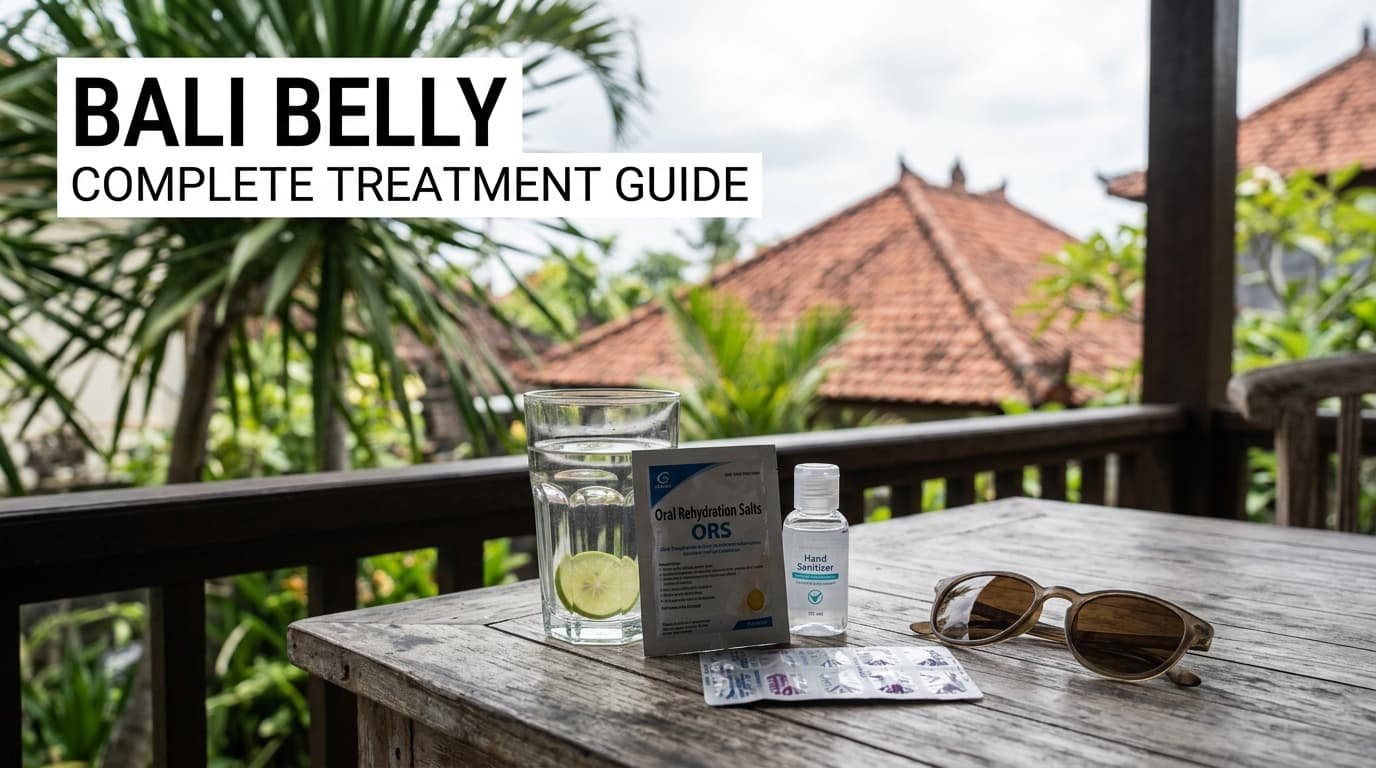
A small, well-stocked travel kit can save your holiday. Include:
- Oral rehydration salts (ORS) – the most important item
- Loperamide (Imodium) – for managing diarrhoea when you need to travel
- Paracetamol – for fever or aches
- Probiotics – to support gut recovery
- Hand sanitiser (60%+ alcohol)
- Water purification tablets – as a backup
- Anti-nausea tablets (e.g., dimenhydrinate)
Important: Avoid Ibuprofen if you have a fever in Bali, as it can increase bleeding risks if your fever is caused by Dengue, which can have similar initial symptoms. Paracetamol (Acetaminophen) is the safer choice.
What to Do When You Get Bali Belly: Step-by-Step
Getting Bali Belly is not the end of your holiday. Act quickly and systematically.
Step 1 – Hydrate immediately. Use oral rehydration salts (ORS) such as Hydralyte. Avoid alcohol, caffeine, and sugary drinks. Plain water alone is not enough; you need to replace electrolytes, too.
Step 2 – Rest. Your body is fighting an infection. Give it the energy to do so. Cancel activities for 24 hours if you can.
Step 3 – Eat light. Once you can stomach food, start with the BRAT diet: Bananas, Rice, Applesauce, Toast. These are gentle, binding foods that settle the digestive tract.
Step 4 – Use medication sensibly Loperamide can help temporarily when you need to manage symptoms during travel or unavoidable outings, but it should not be used to suppress symptoms for long periods. Probiotics can support gut recovery once the worst phase has passed.
Step 5 – Avoid these foods during recovery
- Dairy products
- Spicy food
- Fried or greasy meals
- Raw fruits or vegetables
- Coffee and alcohol
Medications for Bali Belly: What Works
Start with ORS to replace fluids. If vomiting or dizzy spells kick in, an IV drip becomes a safety net. Antibiotics only help confirmed bacterial cases.
Here is a quick reference:
| Medication | Use | Notes |
| ORS (oral rehydration salts) | Rehydration | The first line of treatment is always |
| Loperamide (Imodium) | Slow diarrhoea | Do not use if fever or blood in stool |
| Paracetamol | Fever/aches | Safe in Bali; avoid Ibuprofen |
| Probiotics | Gut recovery | Use after the acute phase |
| Antibiotics | Bacterial infection only | Prescription only; the doctor decides |
Most cases of Bali Belly do not require antibiotics and will resolve on their own with hydration and supportive care. Antibiotics may be prescribed if symptoms are severe, prolonged, or caused by certain bacterial infections.
When to See a Doctor for Bali Belly
Most cases resolve at home. However, seek medical attention if you notice any of the following:
- High fever above 38.5°C
- Blood or mucus in your stool
- Symptoms lasting more than 3 days without improvement
- Signs of severe dehydration: extreme dizziness, fainting, and no urination
- You cannot keep any fluids down at all
- Symptoms started after swimming in a river or lake
A healthcare provider will check your vital signs, possibly do blood tests or stool tests if needed, and ensure you do not have a more serious illness like cholera or typhoid fever, which are rare but possible in some areas and start with diarrhoea.
Frequently Asked Questions
Can you get Bali Belly from brushing teeth with tap water?
Yes, absolutely. Even a small amount of contaminated tap water entering your mouth while brushing is enough to cause infection. Always use sealed bottled water.
Is Bali Belly contagious?
Yes, it can be, especially in viral cases. Wash hands thoroughly and avoid sharing utensils until symptoms fully fade.
How long does Bali Belly last?
Most cases clear up within 1 to 3 days with proper hydration and rest. Severe or untreated cases can stretch to 5-7 days.
Can you get Bali Belly more than once?
Yes. Your body does not develop immunity to all the pathogens involved, so you can get it on multiple trips if you are not careful.
Do probiotics actually help prevent Bali Belly?
Research suggests probiotics can reduce the risk and severity, particularly strains like Saccharomyces boulardii. They are not a guaranteed shield but are a smart addition to your prevention toolkit.
Can children get Bali Belly?
Yes, and children are often more vulnerable to dehydration. Keep a close watch on their fluid intake and see a doctor sooner than you would for an adult.
Does travel insurance cover Bali Belly treatment?
Most travel insurance policies cover medically necessary treatment. Always keep receipts and request a doctor’s note for your insurance claim.
Is Bali Belly the same as food poisoning?
They share symptoms and causes but are not identical. Food poisoning typically comes on faster (within hours), while Bali Belly may develop more gradually. Both involve contaminated food or water.
Final Tips: How to Enjoy Bali Without Getting Sick
Bali is a genuinely incredible destination, and Bali Belly should not be a reason to avoid it or let fear overshadow your trip. The vast majority of travellers who follow basic hygiene and food safety habits get through their entire holiday without a single sick day.
To recap the essentials:
- Drink only sealed bottled water for everything
- Be selective with ice and raw food
- Eat at busy, high-turnover restaurants
- Wash your hands before every meal
- Pack ORS and basic medications before you fly
- Act fast if symptoms start, hydrate immediately
- See a doctor if symptoms are severe, involve blood, or last beyond 3 days
Travel smart, eat wisely, and you will spend a lot more time at the beach than in the bathroom.