







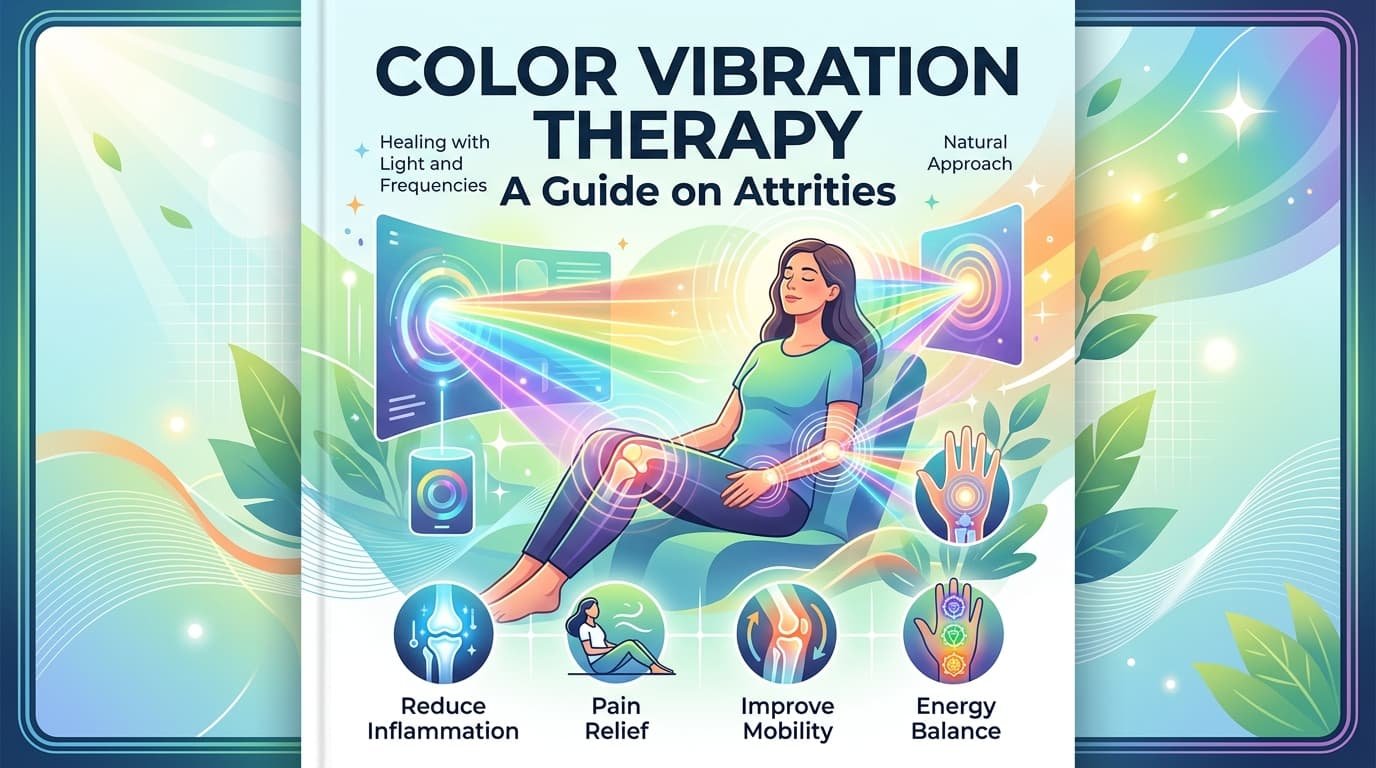
Arthritis affects over 350 million people worldwide, and many are turning to drug-free, non-invasive treatments. Color vibration therapy, also called chromotherapy, is gaining serious attention in 2026 as a complementary approach to managing joint pain, inflammation, and stiffness. This guide covers how it works, what the science says, and how you can use it safely.
Living with arthritis means dealing with pain that never fully goes away. Swollen knees. Stiff fingers in the morning. Joints that ache when the weather changes. Conventional medications help, but they come with side effects, costs, and long-term risks. That’s exactly why millions of people are exploring natural alternatives, and color vibration therapy is one of the most promising ones right now.
This article breaks down everything you need to know: what color vibration therapy actually is, how it interacts with inflamed joints, which colors do what, and how to get started.
What Is Color Vibration Therapy?
Color vibration therapy (also known as chromotherapy or color light therapy) is a healing method that uses specific wavelengths of visible light to restore balance in the body. The underlying principle is simple: every color on the light spectrum vibrates at a unique frequency, and these frequencies interact with the body’s cells, tissues, and energy systems in measurable ways.
Each color carries a different wavelength measured in nanometers (nm). Red light sits at the longer end of the spectrum (around 620-750 nm), while violet sits at the shorter end (380-450 nm). These aren’t just visual differences; they represent different energy levels that the body absorbs and responds to differently.
Key concept: Color light therapy relies on the fact that every color is a form of vibrational energy. All organs, cells, and atoms exist as energy, and each has its own frequency. When parts of the body deviate from their normal vibration, as happens with inflamed joints in arthritis, the right color frequency can help restore that balance.
Understanding Arthritis: What’s Actually Happening in Your Joints
Before exploring how color therapy helps, it’s worth understanding what arthritis actually does to your body. There are two main types:
- Osteoarthritis (OA) – a degenerative condition where the cartilage cushioning your joints gradually wears down, causing bone-on-bone friction, pain, and stiffness.
- Rheumatoid Arthritis (RA) – an autoimmune disease where the immune system attacks the synovial lining of joints, causing inflammation, swelling, and eventual joint deformity.
Both conditions share common symptoms: chronic pain, reduced mobility, joint inflammation, and tissue damage over time. Traditional treatments – NSAIDs, DMARDs, biologics, corticosteroids – manage symptoms but don’t reverse the underlying damage and carry significant long-term risks.
The Science Behind Color Vibration Therapy and Joint Healing
Color vibration therapy doesn’t replace medical treatment. But there is a growing body of evidence that specific light frequencies influence biological processes relevant to arthritis:
- Photobiomodulation – a well-studied mechanism where light energy is absorbed by mitochondria in cells, triggering increased ATP production (cellular energy) and accelerated tissue repair.
- Anti-inflammatory effects – certain wavelengths have been shown to reduce pro-inflammatory cytokines, the signaling molecules responsible for joint swelling and pain in RA.
- Improved circulation – light therapy promotes vasodilation, increasing blood flow to inflamed tissues and helping flush out metabolic waste products that worsen pain.
- Nerve desensitization – specific frequencies can interrupt pain signal transmission, similar to the gate control theory of pain.
Modern photobiomodulation therapy, which uses red and near-infrared light to stimulate healing, has gathered significant scientific support for reducing inflammation and promoting tissue repair. Chromotherapy expands on this by applying a broader spectrum of colors to address different aspects of arthritis.
Which Colors Help Arthritis and How
Each color in color vibration therapy is associated with specific therapeutic properties. Here’s how the key colors relate to arthritis management:
| Color | Wavelength | Primary Benefit for Arthritis | Best Used For |
| Red | 620-750 nm | Stimulates circulation, loosens joint stiffness | Cold, stiff joints; OA morning stiffness |
| Blue | 450-495 nm | Reduces inflammation, cooling effect on hot joints | Acute RA flares, swollen joints |
| Green | 495-570 nm | Balances energy, calms the nervous system | Chronic pain, overall body balance |
| Yellow | 570-590 nm | Nerve stimulation relieves rheumatic pain | Nerve-related arthritis pain, fibromyalgia |
| Violet / Indigo | 380-450 nm | Deep tissue calming reduces pain sensitivity | Severe chronic pain, sleep disruption |
Red Light: The Circulation Booster
Red light is considered a “great energizer” in chromotherapy. It helps loosen stiffness and constrictions by stimulating the circulatory system. For arthritis patients, improved circulation means more oxygen and nutrients reaching damaged joint tissue, and faster removal of inflammation-causing waste products. Red light also activates the adrenal glands, which can give low-energy arthritis patients a natural energy lift.
Blue Light: The Inflammation Fighter
When joints are hot, red, and acutely inflamed, as in an RA flare, blue light is the go-to color. Blue has a natural cooling and calming effect on the body. It’s mentally soothing and physically anti-inflammatory. Studies on blue light have shown it can reduce swelling and is particularly helpful during acute episodes when other therapies feel too intense.
Green Light: The Balancer
Green sits at the center of the visible light spectrum and is associated with balance and harmony. For arthritis patients dealing with long-term, chronic pain that affects mood and mental health, green light helps regulate the nervous system and creates a calming effect that can ease both physical and emotional tension.
Yellow Light: The Nerve Reliever
Yellow is excellent for nerve-related conditions. It’s been traditionally used to relieve rheumatism and arthritis pain specifically, as it stimulates the nervous system and has mild decongestant and antibacterial properties. If your arthritis pain has a burning or nerve-pain quality, yellow light sessions may provide noticeable relief.
Violet and Indigo: Deep-Tissue Calm
Violet and indigo light frequencies work on deeper pain pathways, helping reduce sensitivity to chronic pain signals. They are also calming for sleep, important because poor sleep is one of the biggest quality-of-life challenges for arthritis patients. These colors are often used in evening sessions.
How to Use Color Vibration Therapy for Arthritis
You don’t need to visit a specialist to get started. Here’s a practical overview of how color vibration therapy is applied:
Professional Settings
- Infrared saunas with built-in chromotherapy panels (96+ LED lights across 12 colors)
- Chromotherapy studios or halotherapy centers
- Integrative wellness clinics pairing photobiomodulation with color therapy
At-Home Options
- LED color therapy lamps and panels (widely available in 2026, ranging from $30 to $400)
- Red light therapy devices for targeted joint application
- Color therapy glasses for shorter, focused sessions
- Vibration plates combined with colored light for dual-mode therapy
Session Guidelines
- Start with 10-15 minute sessions, 3-4 times per week
- Choose your color based on your current symptom (see table above)
- Keep a consistent distance from the light source (typically 6-12 inches for panels)
- Combine with gentle stretching or mindfulness for enhanced effect
- Track your symptoms in a simple journal to identify what works best for your body
Pro tip: Combine red light therapy in the morning (to loosen stiff joints) and blue or violet light in the evening (to calm inflammation and improve sleep). This two-phase approach addresses arthritis from both ends of the daily pain cycle.
Color Vibration Therapy vs. Conventional Arthritis Treatments
| Factor | Color Vibration Therapy | NSAIDs / Medications |
| Side effects | Minimal (avoid if photosensitive) | GI issues, kidney risk, cardiovascular risk |
| Cost (long-term) | Low after initial device purchase | High, ongoing prescription costs |
| Speed of relief | Gradual (weeks of consistent use) | Faster (hours to days) |
| Targets inflammation | Yes (especially blue/red light) | Yes (primary mechanism) |
| Supports tissue repair | Yes (photobiomodulation) | No |
| Suitable for long-term use | Yes | Restricted (risk accumulates) |
Safety and Precautions
Color vibration therapy is considered safe for most people when used properly. However, there are important precautions to keep in mind:
- Always consult your doctor before starting, especially if you have cardiovascular disease, epilepsy, or are on photosensitive medications
- Avoid direct light exposure to the eyes without protective goggles
- People with pacemakers or metal implants should avoid certain vibration-based devices
- Those with active skin conditions should start with shorter sessions
- Pregnant women should seek medical clearance first
Note: While color therapy has a long history and growing research base, it is a complementary therapy, not a replacement for medical care. The FDA has not approved chromotherapy as a standalone treatment for any disease.
Who Can Benefit Most from Color Vibration Therapy?
This therapy tends to work best for:
- People with mild to moderate osteoarthritis looking to reduce NSAID dependence
- Rheumatoid arthritis patients seeking complementary relief between flares
- Older adults who need low-impact, gentle treatment options
- Anyone experiencing arthritis-related sleep disruption or mood issues
- Patients combining color therapy with physical therapy or yoga for joint health
Frequently Asked Questions
Does color vibration therapy actually work for arthritis?
Research, especially on red and blue light wavelengths, shows measurable anti-inflammatory and pain-relieving effects. It works best as a complementary approach alongside conventional treatment.
Which color is best for arthritis pain?
Red light is best for stiffness and circulation; blue light is best for active inflammation and swelling. Combining both across the day gives the most complete relief.
How long does it take to see results?
Most people notice gradual improvement after 2-4 weeks of consistent sessions (3-4 times per week). Acute pain relief can sometimes occur within a single session.
Can I do color therapy at home?
Yes. Affordable LED panels and targeted light therapy devices make at-home use practical and accessible for most people in 2026.
Is color vibration therapy safe for elderly arthritis patients?
Generally, yes, it’s low-impact and non-invasive. Elderly patients should start with shorter sessions and consult their physician, especially if they take multiple medications.
Can I use color therapy alongside my arthritis medication?
In most cases, yes. Always inform your doctor, as some medications increase photosensitivity and may require adjusted session lengths or intensity.
What is the difference between chromotherapy and red light therapy?
Red light therapy uses a single wavelength (red or near-infrared) for targeted tissue repair. Chromotherapy uses the full spectrum of colors to address a wider range of physical and emotional conditions.
Conclusion
Color vibration therapy offers a genuinely promising, low-risk complement to conventional arthritis treatment. By matching specific light frequencies to your current symptoms, red for stiffness, blue for inflammation, violet for deep pain, you can address arthritis from multiple angles without adding more medications to your routine.
It’s not a miracle cure. But for millions of arthritis patients who want to reduce their dependence on drugs, improve their sleep, and support their joints with something natural and evidence-informed, color vibration therapy in 2026 is worth serious consideration.
Always work with a qualified healthcare provider when adding any new therapy to your arthritis management plan.