






Tight calves can sneak up on anyone, whether you’re a runner logging miles, a desk worker glued to your chair, or someone who just wants to move through the day without that nagging stiffness. The good news? Simple Calf Stretches can make a real difference. They improve ankle mobility, ease tightness, and help prevent common issues like shin splints or plantar fasciitis.
At Accelerate Physical Therapy, we see calf mobility as a game-changer for everyday comfort and athletic performance. In this guide, we’ll break down the science, share easy stretches (both static and dynamic), and give you practical tips to get lasting results.
What Are Your Calf Muscles?
Your calves are the powerful muscles at the back of your lower leg, right below the knee. They’re made up of two main players: the gastrocnemius (the larger, more visible muscle with two heads that crosses both your knee and ankle) and the soleus (a deeper, flatter muscle that only crosses the ankle). Together with a smaller muscle called the plantaris, they form the triceps surae group.
These muscles connect to your Achilles tendon and power plantarflexion, pointing your toes downward. That’s what lets you walk, run, jump, stand on tiptoes, and absorb shock with every step. When they’re flexible and strong, your whole lower body moves better. When they’re tight, everything from your ankles to your hips can feel the strain.
What Causes Tight, Stiff Calves?
Tight calves often come from a mix of everyday habits and activity levels. Overuse is a big one, think ramping up running mileage too quickly or spending hours on your feet. On the flip side, too much sitting (hello, desk jobs) shortens the muscles over time. Poor footwear, like high heels or unsupportive shoes,s keeps your calves in a shortened position all day.
Other culprits include dehydration, low electrolytes, sudden cramps, ankle injuries that limit dorsiflexion (pulling toes toward your shin), or even biomechanical quirks like flat feet. Research shows these factors can reduce ankle range of motion and set off a chain reaction of compensation throughout your body.
What’s the Problem with Calf Tightness?
Ignoring tight calves isn’t just uncomfortable; it can lead to bigger issues. Limited ankle mobility forces your body to compensate, often overloading your Achilles tendon, shins, knees, or even your lower back. This raises your risk for plantar fasciitis, shin splints, Achilles tendinopathy, and even falls in older adults.
Studies link poor calf flexibility to reduced blood flow, weaker leg strength over time, and lower overall mobility. For athletes, it can mean slower strides, less power, and more downtime from injuries. The good news is that consistent stretching helps restore range and keeps these problems at bay.
Why the Calves Matter More Than You Think
Your calves do way more than look good in shorts; they’re the foundation of efficient movement. They absorb impact when your foot hits the ground, stabilize your ankles during balance moves, and generate the push-off power for running or jumping. Tight calves limit dorsiflexion, which research shows can cut your stride length and running economy.
In daily life, they affect posture, gait, and even how well you squat or lunge. At Accelerate, we’ve seen clients transform their performance and ditch chronic pain just by addressing calf mobility. It’s often the missing piece that ties everything together from foot to hip.
Stretches and How to Do Them
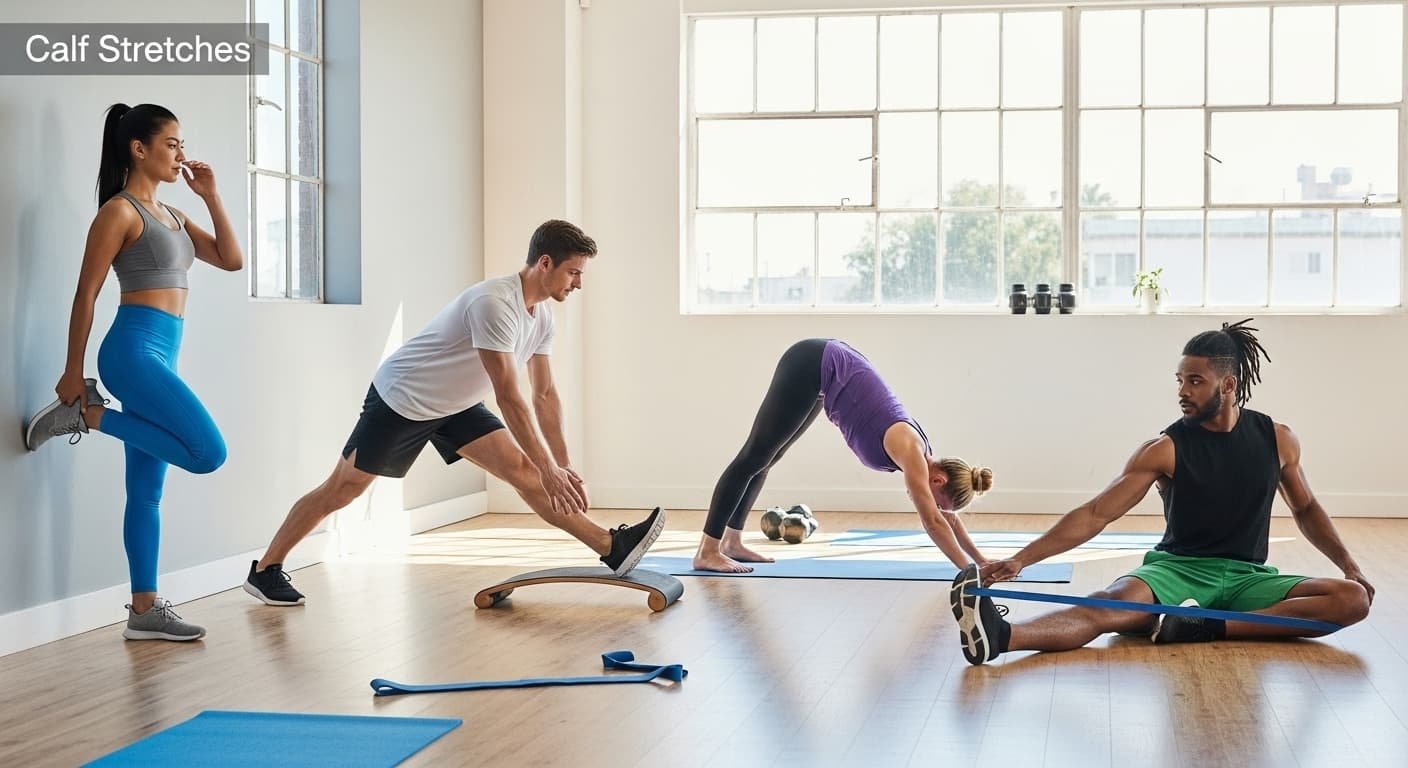
The best calf stretches target both the gastrocnemius and soleus for full relief. Always warm up lightly first with a short walk. Here are some proven options:
For a classic static wall stretch (great for the gastrocnemius), stand arm’s length from a wall. Step one foot back, keep the back leg straight and heel down, and lean forward until you feel a gentle pull. Hold 15-30 seconds, repeat 3 times per side. To hit the deeper soleus, bend the back knee slightly while keeping the heel planted.
The towel stretch is perfect when you’re sitting. Loop a towel around the ball of your foot, straighten your leg, and gently pull your toes toward you. Hold 30 seconds. Downward dog (from yoga) stretches both calves and the whole posterior chain. Press your heels toward the floor in an inverted V shape and pedal your feet for extra release.
Static vs. Dynamic Calf Stretch: What’s the Difference?
Static stretches involve holding a position (like the wall lean) for 15-60 seconds. They’re ideal after workouts or in the evening to increase flexibility and relax tight muscles. Dynamic stretches use controlled movement, like shifting your knee over your toes while keeping the heel down.
These warm up the muscles, boost blood flow, and prep your nervous system for activity, perfect before runs or lifts. Research and clinical experience show static work is better for cooldowns, while dynamic moves improve performance and reduce injury risk when done as part of a warm-up.
How Can Calf Stretches Help?
Regular calf stretches deliver real results backed by studies. They increase ankle dorsiflexion (even a small 2-3° gain helps), ease plantar fasciitis pain, improve blood flow, and support better gait.
For runners, they enhance stride efficiency and cut overuse injury risk. Older adults see gains in leg strength and fall prevention. Overall, you’ll move with less compensation, recover faster, and feel more stable in everything from daily walks to heavy lifts.
The Best Dynamic Calf Stretch You Should Be Doing
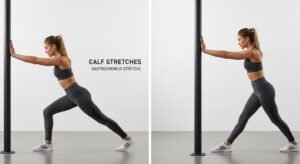
Our go-to at Accelerate is the dynamic knee-over-toe calf stretch. It’s simple, effective, and mimics real movement patterns.
Start in a split stance with your front foot flat and toes forward. Slowly drive your front knee over your toes while keeping the heel grounded, feel the stretch in your back calf and Achilles. Return smoothly and repeat 10-15 times per side. Keep it controlled, no bouncing.
For progression, elevate the front foot slightly or add a light weight. Do this before runs, workouts, or even as a midday reset. It activates the muscles, improves dorsiflexion, and preps you for better performance while lowering injury risk.
Tips
- Breathe deeply and never force a stretch; mild tension is enough.
- Stretch both sides evenly, even if one feels tighter.
- Combine with strength work like calf raises for balanced results.
- Consistency beats intensity: 5-10 minutes daily beats sporadic long sessions.
- Track your progress with the knee-to-wall test (measure how far your knee can reach over your toes).
- If you have pain (not just stretch sensation), stop and consult a professional.
Why We Prioritize Calf Mobility at Accelerate
At Accelerate Therapy and Performance, calf mobility is a cornerstone of nearly every client’s plan. We assess ankle range, foot mechanics, and calf tension right from the start because limited mobility is often the hidden root of knee pain, hip issues, or running setbacks. We combine dynamic drills like the knee-over-toe stretch with manual therapy (such as dry needling for trigger points) and targeted strengthening.
This root-cause approach helps clients move better, recover faster, and stay injury-free, whether they’re training for a marathon or just want pain-free daily life. It’s not guesswork; it’s personalized results.
Additional Treatments
Stretching is powerful, but pair it with other tools for faster relief. Foam rolling or massage guns can release trigger points. Eccentric heel drops build strength and resilience in the Achilles. For persistent tightness, consider physical therapy for custom plans, or simple home remedies like warm compresses and hydration. In some cases, addressing footwear or orthotics makes a huge difference.
Common Mistakes to Avoid (and How to Fix Them)
Many people bounce during static stretches (bad idea, it can strain tissues) or collapse their arch (which reduces the stretch’s effectiveness). Over-stretching cold muscles before activity can actually decrease power. Fix it by warming up first and focusing on smooth, controlled moves. If tightness lingers despite stretching, it might signal weakness; add calf raises.
Calf Stretches for Runners and Desk Workers
Runners benefit most from dynamic moves pre-run and static holds post-run to protect against shin splints and improve economy. Desk workers can do quick seated towel stretches or standing wall leans during breaks to counteract all-day shortening. Both groups see better posture and fewer aches with a consistent routine.
FAQs
What Are the Benefits of Calf Stretches?
Calf stretches boost flexibility, increase ankle range of motion, reduce pain from tightness or conditions like plantar fasciitis, improve blood flow, enhance balance, and lower injury risk. They also support better running performance and overall lower-body strength.
When Should You Do Calf Stretches?
Use dynamic calf stretches as part of your warm-up before activity. Save static stretches for after workouts or in the evening. Daily short sessions (even 5 minutes) work wonders for maintenance.
Why Are Calf Stretches Important for Runners?
They improve dorsiflexion for a longer, more efficient stride, absorb shock better, and help prevent common running injuries like shin splints or Achilles strain. Dynamic versions prep muscles for the demands of the road.
How Do Calf Stretches Improve Performance?
Better mobility means smoother mechanics, more power in push-off, reduced compensation, and faster recovery. Studies show even modest gains in ankle flexibility can enhance running economy and jump height.
Where Can You Do Calf Stretches Effectively?
Almost anywhere! Use a wall at home or the office, a step at the gym, a towel while watching TV, or even the floor for seated versions. No fancy equipment needed.
Conclusion
Calf Stretches are one of the simplest ways to feel better, move freer, and stay active longer. Whether you’re chasing PRs or just want to keep up with the kids, prioritizing your calves pays off big time. Start with the dynamic knee-over-toe stretch today, stay consistent, and you’ll notice the difference in days.
If tightness persists or you want a personalized plan, our team at Accelerate is here to help. Your calves (and the rest of your body) will thank you. Ready to loosen up? Give these a try and let us know how it feels!