








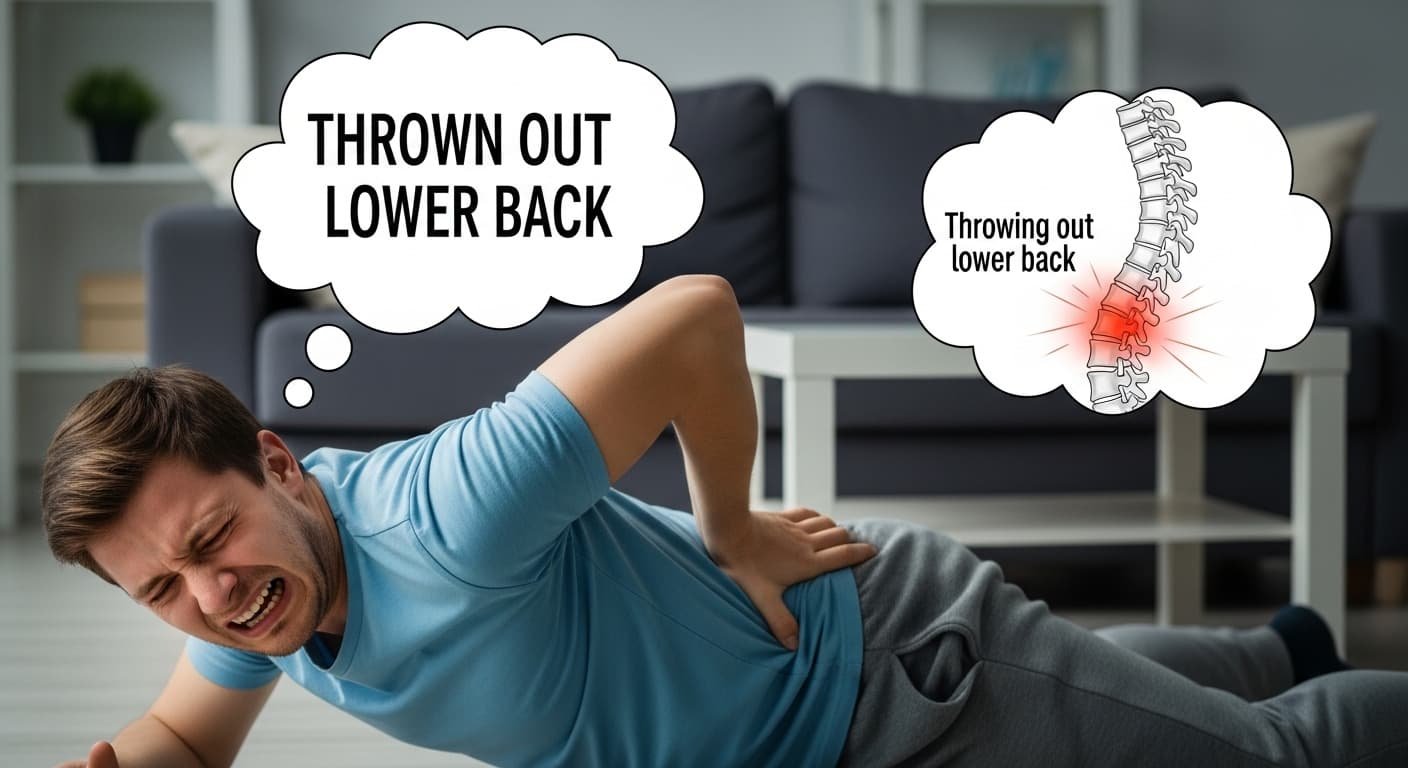
Have you ever bent over to grab something simple, like a dropped phone or a bag of groceries, and felt a sudden, knife-like pain seize your lower back? In an instant, standing up straight feels impossible, and every tiny movement sends you wincing. This is what millions of Americans call a “Thrown Out Lower Back.” It’s not a fancy medical diagnosis, but it’s incredibly common: Acute low back pain affects nearly 59 million U.S. adults every year.
The good news? Most cases are temporary muscle or ligament strains that improve quickly with the right at-home steps. In this guide, you’ll learn exactly what’s happening, the fastest ways to ease the pain, when to get professional help, and how to stop it from happening again. Whether you’re dealing with it right now or want to prevent the next episode, these practical, evidence-based tips can get you moving again, safely and confidently.
What is ‘Throwing Out’ Lower Back?
“Throwing out lower back” is everyday language for sudden, intense, acute low back pain. Doctors call it an acute lumbar strain or sprain. It happens when muscles, ligaments, or soft tissues in your lower back get overstretched or torn by an everyday movement.
The pain usually strikes out of nowhere during twisting, bending, or lifting, even something as light as sneezing, if your back is already tight. It’s not usually a slipped disc or broken bone; it’s your body’s way of protecting itself with muscle spasms and inflammation. Most people feel better within days to a couple of weeks when they follow simple self-care.
What Part of the Lower Back Is Usually Affected?
The lower back, or lumbar spine, takes the biggest hit. This area includes five vertebrae (L1 to L5) between your rib cage and pelvis. It carries most of your body weight and handles bending, twisting, and lifting. The parts most often involved are:
- Paraspinal muscles (like the erector spinae and multifidus) that stabilize your spine.
- Ligaments that hold the vertebrae together.
- Facet joints that let your spine move smoothly.
- Occasionally, it occurs in the outer layer of a disc or nearby nerves.
Because the lumbar region is so mobile and load-bearing, even a small, awkward move can irritate these structures and trigger protective spasms.
Steps to Take After Throwing Out Your Lower Back
Don’t panic, quick action now can cut your recovery time in half.
Immediate First Aid (First 48 Hours)
Stop the activity that caused the pain. Lie down in a comfortable position with your knees slightly bent (use pillows for support). Apply ice wrapped in a cloth for 15-20 minutes every 2-3 hours. Ice reduces swelling and numbs the sharp pain. Avoid heat at first; it can increase inflammation.
Gentle Movement Over Total Bed Rest
After the first day or two, start short, slow walks around the house. Prolonged bed rest actually slows healing. Current guidelines from the American College of Physicians recommend staying as active as your pain allows to keep blood flowing and prevent stiffness.
Over-the-Counter Relief
Take ibuprofen or naproxen (NSAIDs) as directed to ease pain and inflammation. Acetaminophen can help if NSAIDs aren’t suitable. Topical NSAID gels also work well with fewer stomach side effects.
When Pain Starts to Ease
Add gentle stretches like knee-to-chest or cat-cow pose once spasms calm down. These keep you mobile without strain.
Symptoms
The pain hits fast and feels unmistakable.
Sharp or Aching Low-Back Pain
It’s usually centered in the lower back and may spread to the buttocks, but rarely shoots down the legs (that could signal nerve involvement).
Muscle Spasms and Stiffness
Your back muscles may tighten into hard knots, making it hard to stand straight or turn.
Limited Mobility
Bending, sitting, standing, or walking can worsen the pain. Many people feel better lying flat.
Swelling or Tenderness
The area may feel warm or sore to the touch for the first few days.
Symptoms typically peak in the first 24-48 hours and improve steadily with care.

Causes
Every day of life is full of hidden triggers.
Awkward Lifting or Twisting
Lifting while bent at the waist or twisting your torso (think shoveling snow or swinging a golf club) is the top culprit.
Poor Posture and Weak Core
Slouching at a desk all day weakens supporting muscles, so even a small move can overload the lumbar area.
Sudden Movements
Sneezing, coughing, or stepping off a curb the wrong way can strain tight muscles.
Other Factors
Being overweight, stressed, or out of shape, or having tight hamstrings, increases risk. Repetitive bending in jobs like nursing or construction also adds up.
Non-Surgical Treatment Options for Acute Lower Back Pain
Most people never need more than these proven steps.
Ice, Heat, and Movement Therapy
Ice first, then switch to moist heat after 48 hours. Pair it with light walking and core-friendly exercises.
Physical Therapy and Guided Exercises
A PT can teach you safe stretches and strengthening moves. Studies show early movement plus PT speeds recovery and lowers the chance of chronic pain.
Medications and Topical Treatments
Follow ACP guidelines: topical NSAIDs are often first-line. Muscle relaxants may help in the short term if spasms are severe.
Other Helpful Options
Massage, acupuncture, or gentle yoga can reduce pain and improve function without drugs.
When to Seek Medical Care for a Back Injury
See a doctor right away if you have:
- Numbness, tingling, or weakness in your legs
- Loss of bowel or bladder control
- Fever or unexplained weight loss
- Pain after a fall or accident
- Pain that lasts longer than 4-6 weeks or gets worse
These could signal something more serious than a simple strain.
Minimally Invasive Procedures for a Thrown Out Lower Back
If conservative care doesn’t fully resolve the issue after several weeks, options like epidural steroid injections can calm inflammation around irritated nerves. Other targeted procedures (such as MILD for spinal stenosis or basivertebral nerve ablation) use tiny incisions and quick recovery times, often with same-day discharge.
PT Tip: Take a Deep Breath
One of the simplest yet most powerful tools is diaphragmatic breathing. Lie on your back, place one hand on your belly, and breathe deeply so your stomach rises more than your chest. This relaxes tight back muscles, reduces fear of movement, and gently engages your deep core. Doing it for 2-3 minutes several times a day, it can cut spasm intensity almost immediately.
Diagnosis
Your doctor will start with a detailed history and physical exam to rule out red-flag conditions. Most cases need no imaging. If symptoms persist or red flags appear, an MRI or X-ray can pinpoint the exact issue.
How to Prevent Future Back Injuries
Prevention is easier than you think:
- Lift with your legs, not your back, bend at the knees, and keep the load close.
- Strengthen your core with planks, bridges, and bird-dog exercises 3-4 times a week.
- Maintain good posture at your desk and take movement breaks.
- Keep a healthy weight and stretch tight hips and hamstrings daily.
- Stay active, regular walking and yoga keep your lumbar muscles resilient.
When to See a Doctor
If home care isn’t cutting it after 1-2 weeks, or if pain interferes with sleep or work, schedule an evaluation. Early expert care prevents small problems from becoming chronic.
FAQs
What Should You Do If You Throw Out Your Lower Back?
Stop, ice for 48 hours, take an anti-inflammatory, and move gently as soon as possible. Avoid total bed rest.
When Is It Time to See a Doctor for a Thrown-Out Lower Back?
If pain lasts beyond 2 weeks, you have leg weakness/numbness, or you lose bowel/bladder control, get checked immediately.
Why Does Lower Back Pain Occur After Throwing It Out?
Muscle spasms and inflammation protect the injured area, but poor movement patterns can keep the cycle going.
Where Can You Find Effective Treatments for Lower Back Pain?
Start with your primary doctor or a spine specialist like those at Advanced Spine Center for personalized non-surgical and advanced options.
How Can You Prevent Throwing Out Your Lower Back Again?
Build core strength, lift properly, fix posture, and stay active. Small daily habits make a huge difference.
Conclusion
A thrown-out lower back can stop you in your tracks, but it doesn’t have to sideline you for long. With smart first-aid steps, the right movement, and prevention habits, most people bounce back stronger than before.
Listen to your body, stay consistent with core work, and don’t hesitate to reach out to a spine expert when needed. If your pain isn’t improving, the team at Advanced Spine Center is ready to help you get back to the life you love, pain-free. You’ve got this! Share this guide with anyone who’s ever winced after a bad bend, and start building a stronger, more resilient back today.